Get the ChainIT ID App

Scan the QR Code with your phone to download the app.

ChainIT ID QR Code

The Hidden Cost of KYB Non-Compliance: Fines, Fraud, and Corporate Liability

Business dealings online have also intensified, yet fraudulent schemes have also progressed simultaneously and even faster than compliance measures used by most organizations. As companies onboard vendors, clients, partners, and suppliers in large numbers, outdated KYB controls create a dangerous mismatch, allowing seemingly legitimate organizations to conceal underlying risk.

The Outcome: Growing corporate vulnerability to fraud, false onboarding, and KYB non-compliance.
Global Regulators imposed approximately USD 4.5 billion in bank fines

In 2024, global regulators imposed approximately $4.5 billion in bank fines often tied to AML/KYC/KYB and compliance failures, with anti‑money‑laundering breaches among the most common violations worldwide.

When KYB non-compliance occurs, penalties are only the beginning. Issues such as a fake-vendor scam, failure of AML and CIP checks, incorrectly matched tax registrations and IRS notices, or failure of state-registry may all undermine the balance of a firm.

This is why a large number of companies are now turning to automated systems such as ChainIT, not only to stay within the limits but also to reduce exposure and safeguard corporate transparency.

Understanding KYB Non-Compliance in Modern Regulated Markets

KYB Verification is the business-side counterpart to customer due diligence. It verifies the identity, ownership, and legitimacy of an entity before onboarding and ensures authoritative, anti-money-laundering, and risk-control compliance among partners, vendors, and clients.

Why KYB Matters in High-Velocity Digital Environments?

The pace of digital onboarding, worldwide collaborations, and large volumes of transactions enhances the risks of mistakes. With companies making efforts to onboard vendors and business partners, manual KYB methodologies tend to fail to keep pace, which amplifies the chances of scams and mis-onboarding. 

Accenture’s Global Banking Consumer Study (2025) shows how digital scale has changed customer behavior and raised the stakes for frictionless but safe onboarding their survey covers 49,300 banking customers across 39 countries and highlights that customers now hold multiple banking relationships, so onboarding frictions drive attrition and migration.

The Rising Enforcement Landscape

KYB penalties and fines, enforcement gaps are no longer overlooked by regulators. Enforcement orders are now provided to multiple agencies, including AML regulators and tax authorities, and state registries. Any small omissions or discrepancies in data may result in legal exposure, audits, and huge penalties.

As compliance scrutiny increases, non-bank firms, not just banks are now affected by enforcement actions.

Financial, Legal, and Operational Damage Caused by KYB Non-Compliance

KYB Non-Compliance Consequences

When KYB collapses, it has a trickle-down effect on all aspects of operations, compliance with payments, and taxation.

AML penalties

Incomplete or incorrect business-identity information tends to increase the risk of AML breaches during audits or regulatory applications. In 2024, a wide range of companies paid fines totaling billions of dollars due to the absence of an adequate AML programme or to the inability to accurately verify the identity of counterparties.

CIP errors

Adherence failures and administrative flags are caused by the disintegration of the Customer Identification Program (CIP) (e.g., inconsistent legal names, outdated certificates, or the absence of ultimate beneficial owner (UBO) data), among other factors.

Fake vendor fraud

Poor KYB controls may compromise vendor schedules for fraudulent groups, bogus businesses, or fake vendors. They are then able to hide the illegal billing in organizations that are reputable, give forged invoices or spend money in the wrong ways.

Contract disputes

Contractual obligations may fail or become unenforceable when organizations are misidentified or their legal identities are uncertain. This causes delayed settlements, null deals and business disruption or termination.

IRS mismatches

Wrong EINs, incorrect owner information, or outdated registrations can result in costly IRS corrections, tax notices, letters, or audit triggers. Firms may experience delays, forfeitures of funds, or deductions.

SOS registration failures

Onboarding the right vendor or partner is hindered by overwhelming records or invalid records in the state registries. This generates managerial delays, evades legal binding of contracts, and frustrates operations.

Root Causes Behind KYB Non-Compliance

In most cases, the issue is structural rather than intentional. Structured KYB failures occur long before scams or enforcement, due to inefficient processes, fragmented data, and outdated workflows.

Document Mismatches and Fragmented Entity Data

  • Numerous firms rely on past registration documents, documents collected by hand, or opposing conventions of nomenclature. 
  • This results in legal name mismatches, expired certificates and incomplete ownership information, all of which are key aspects of risk.

Insufficient Beneficial Ownership and Control-Person Validation

  • In the absence of the appropriate UBO verification, criminals can operate under the cover of layered ownership structures. 
  • The complex webs of beneficial ownership or shell-entity linkages are very difficult to detect through manual checks, leaving firms exposed to them.

Over-Reliance on Manual Validation and Email-Based Workflows

  • Manual KYB functions, i.e., emails, spreadsheets, and manual revisions, are slow, unreliable, and tend to have errors. 
  • This type of inefficiency results in failure to make decisions, overlooked red flags and variances in the compliance practices among vendors.

Incomplete AML, Sanction and Watchlist Screening

  • Sanctions lists, adverse media checks, or sanction-by-association filters are commonly ignored in partial or traditional screening systems. 
  • Thus, unsafe bodies can be allowed on the board during onboarding.

Missing or Inconsistent Audit Trails

  • Supervisory audits become a nightmare because of poor recordkeeping, including a lack of records, inconsistency in updating records, and the absence of timestamped verification documents. 
  • Companies are in a dilemma of proving persistence, thereby making them more prone to fines.

The Ripple Effect: How KYB Breakdown Impacts Daily Business Operations?

Pitfalls in KYB compliance failure not only impact compliance but also interfere with key business processes, such as procurement and payments, contracts and reporting.

Vendor Management and Procurement Failures

Inadequate KYB validation during vendor onboarding weakens supplier authentication, allowing unverified entities to enter procurement systems unnoticed.

This can trigger:

  • Contractual exposure risks
  • Financial leakage points
  • Digital Audit trail breakdowns
  • Governance accountability gaps

Tax Filing and Financial Reporting Complications

Poor entity data quality undermines financial accuracy, causing incorrect tax submissions and regulatory disclosures that weaken reporting integrity across statutory obligations.

Which results in:

  • Increased audit exposure
  • Costly regulatory corrections
  • Statutory filing penalties
  • Financial statement restatements

Payment Freezes and Banking Restrictions

Insufficient business identity verification triggers bank compliance alerts, leading financial institutions to restrict accounts and disrupt legitimate payment operations.

This leads to:

  • Stalled outgoing payments
  • Short-term liquidity stress
  • Processing timeline delays
  • Partner relationship erosion

Also Read: KYB Business Verification for Payment Processors

Contract Instability and Legal Exposure

Lack of entity verification creates fragile agreements, exposing organizations to hidden obligations, strategic setbacks, and cascading operational or financial disruptions.

Resulting in:

  • Hidden liability risks
  • Business continuity gaps
  • Unanticipated penalty costs
  • Strategic decision setbacks

How Automation Reduces KYB Compliance Risks?

Modern automation reduces the hidden cost of failed KYB compliance by improving accuracy, scalability, and oversight.

Strong KYB verification solutions such as ChainIT, provide timely, precise verification checks, cross-registry checks, and real-time monitoring, which are far more effective at reducing human errors and eliminating gaps in compliance.

Automated Entity Verification and Real-Time Registry Checks

  • APIs have now accessed official registries, tax-ID databases, and global business registries. 
  • Document-intelligence tools are automated and use registration certificates to authenticate the data within a few seconds. 
  • ChainIT solutions solve these workflows, which make individuality, UBO, and registration data valid.

Ongoing Monitoring for Ownership, Status, and Registration Changes

  • Confirmation is no longer a one-time affair. 
  • Changes in ownership, status of organizations, and revocations of registries are constantly checked by automated tools that ensure that dormant or revoked entities do not creep into the activities. 
  • ChainIT facilitates continuous observation to ensure the reliability of KYB once onboarded.

Centralized Audit Trails Supporting Rapid Regulatory Reporting

  • All verifications, updates, flags, and clearances are automatically logged. 
  • That generates immutable audit trails that are clean and ready to be audited by the regulators, making compliance checks easier. 
  • ChainIT centralized reporting ensures that companies are in a position to promptly provide KYB diligence whenever there is an audit or review.

Building a Strong KYB Compliance Framework for 2025 and Beyond

To stay ahead of administrative loopholes and scam threats, businesses must evolve their KYB approaches. Below are some steps that executives can deploy immediately:

  • Strengthen alignment with AML, CIP, and regulatory requirements, and integrate KYB into wider adherence frameworks.
  • Replace manual procedures with policy-guided automation to ensure consistency and prevent human error.
  • Broaden fraud intelligence across vendor and partner webs, extending checks to all third parties.
  • Consolidating scalable platforms like ChainIT for standardized digital identity verification, registry checks, and UBO screening.

KYB Business Verification for Payment Processors: Why Acquirers, ISOs, and Gateways Need Stronger Merchant Verification

Introduction

Digital payments have accelerated the evolution of commerce, while simultaneously revealing new risks for payment processors. Now’s the time for fraudsters to exploit underwriting gaps creating fake merchants, shell companies, synthetic businesses, and high-risk operators disguising themselves as low-risk merchant categories at the expense of acquirers, ISOs, and payment gateways. 

Global online payment fraud detection spending will grow to 20.52 billion dollars by 2029

According to a report, Global online payment fraud detection spending will grow from 11.16 billion dollars in 2025 to 20.52 billion dollars by 2029. Such escalation reflects expanding organizational fraud risks across digital ecosystems, urging agencies to adopt stronger verification frameworks and proactive KYB-driven safeguards.

This rapid growth of the digital onboarding process has given fraudsters an opening where outdated methods of checks can be easily bypassed. Traditional KYB layers methods, manual reviews, single-registry searches and slow verifications cannot compete. Real KYB verification is now a necessity for merchants onboarding in a fast, safe, and compliant manner.

Why Payment Processors Face New-Age Merchant Fraud?

Digital payments have shifted fraud from straightforward identity fraud to sophisticated merchant-focused manipulation with a mix of synthetic identities, fabricated company histories, and high-risk facades. This is made possible with the risk-acceleration challenge of fast digital onboarding to processors.

The Rise of Fake Merchants Targeting High-Velocity Platforms

  • Fake merchants are now one of the most rapidly emerging fraud threats to processors. Fraudsters set up shell companies, utilize stolen or synthetically constructed EIN data, and quickly generate fraudulent merchant accounts that immediately begin cash-out transactions. 
  • Research shows that global e-commerce merchants lose an estimated $48 billion annually to online payment fraud. Fake merchants exploit digital-first onboarding systems to create shell accounts that rapidly process high-velocity transactions. Once payouts occur, these actors disappear before chargebacks surface, leaving processors exposed to significant financial and operational risk.
  • KYB business verification for Payment Processors can catch these fraudsters early cross-referencing EIN data, registry disparities and ownership anomalies before accounts are live.

Synthetic Businesses Using Fabricated Corporate Credentials

  • Synthetic businesses are more advanced than basic counterfeit merchants. Criminals create complete corporate profiles with false tax ids, forged business incorporation certificates, fabricated bank statements, and they pass simple document verification because nothing is stolen; it is all made up. 
  • According to the Federal Reserve’s latest findings, synthetic identities now drive almost one-quarter of all unsecured credit losses in the U.S. At the same time, account-takeover activity has surged by more than 120% year-over-year across both Asia-Pacific and Europe, signaling a rapidly escalating global fraud landscape.
  • Automated business verification tools uncover this type of activity by analyzing document metadata, cross-referencing registries, and identifying anomalies with ownership timelines.

MID and TID Manipulation in Multi-Processor Workflows

  • Bad actors are increasingly recirculating or spoofing Merchant IDs and Terminal IDs between acquirers and payment gateways. This allows bad actors to circumvent velocity controls, reuse previously approved profiles and obscure true merchant identity across networks.
  • The 2024 Global eCommerce Payments & Fraud Report found that the average number of distinct fraud types per merchant rose from three to four between 2022 and 2024. 
  • Continuous Know your Business Verification with cross-network intelligence will flag shared UBOs, history of device/IP fingerprints, and any mismatched merchant identifiers.

High-Risk Operations Masquerading as Low-Risk Merchants

  • Fraudsters frequently claim to be in low-risk categories such as restaurants or supermarkets while, in actuality, they are engaged in the illegal activities, counterfeit goods or the nutraceutical category. 

Types of Fraud Experienced

  • Nearly 98% of merchants globally experienced one or more fraud types in the past 12 months, underscoring how pervasive fraud threats are across e‑commerce.
  • Advanced verification systems can confirm the actual business model, check the contents of their website, and confirm the MCC with their stated activity to expose the true nature of their high-risk operations.

Recent Fraud Case Insight

In 2013, US prosecutors dismantled a ring creating 7,000 synthetic identities, issuing 25,000 fraudulent cards, stealing over $200 million.

Why Acquirers, ISOs, and Payment Gateways Need Real KYB Verification?

Actionable validation, where the data about a particular entity is multi-source, behavioral intelligence, and constant risk monitoring are the keywords that Modern KYB is concerned with, rather than documents or a single check.

Multi-Source Corporate Identity Validation Beyond Static Databases

Layered registry checks, sanctions screening, credit-bureau intelligence and real-time operational signals strengthen business identity verification and expose hidden risks earlier in onboarding.

  • Registry data triangulation
  • Sanctions list screening
  • Credit-bureau verification
  • Real-time address checks
  • Website and number validation

Business Model Reality Check and MCC Alignment Review

Declared MCC codes are compared against website content, product offerings and transaction patterns to identify disguised high-risk merchants and detect inconsistent operational behavior.

  • Website content review
  • Product category match
  • Transaction-pattern analysis
  • MCC discrepancy flags
  • Risk-category validation

Beneficial Ownership and High-Risk Actor Screening

True beneficial owners and layered structures are uncovered and screened against global high-risk lists to prevent sanctioned or criminal actors from entering payment ecosystems.

  • UBO identification checks
  • Structure-layer mapping
  • Sanctions list screening
  • Criminal-risk detection
  • PEP exposure analysis

Risk Signals and Behavioral Indicators Over Basic Documentation

Behavioral anomalies such as transaction spikes, timing patterns and repeated digital fingerprints highlight fraudulent intent far earlier than standard document-driven verification methods.

  • Transaction-surge alerts
  • Suspicious timing signals
  • Repeated IP patterns
  • Document inconsistency flags
  • Anomalous communication cues

The KYB Workflow Process Tailored for Payment Processors

An automated and structured KYB for Payment Processors enables processors to remain both fast and compliant.

Application Intake and Initial Merchant Data Capture

  • Digital forms solve for the capture of legal business name, DBA, UBO information, MCC, expected volumes, and required documents. 
  • If data is missing, automated validation will flag that, further driving the speed of the process.

Registry and Documentation Verification Across Authoritative Sources

  • The verification for both the active registry and document authenticity is confirmed via multi-registry verification. 
  • Cross-referencing the incorporation details or ownership structure of the application can further catch missing data or incorrect information.

Business Intent Assessment and MCC Risk Evaluation

  • Processors also determine the compliance of claimed goods/services with the operational footprint of the merchant. 
  • The declared MCC has to coincide with transaction ranges, product categories, and the presence of the websites.

Decision Engine Routing for Approve, Reject, or Manual Review

  • The scoring route of risk cleans profiles to auto-approve, flags moderate-risk profiles to analyst review, rejection of merchants with forged documents or high-risk actors, and maintains the onboarding process as fast and accurate.

Also Read: Benefits of Identity Verification Platforms

Core Components of KYB Business Verification Shaping Payment Success

Real KYB combines checks of identity, ownership transparency, operational legitimacy, document verification, and AI-based scoring into one unitary verification model.

  • Business Identity Validation: Validity confirmation of the legal name, registration status, and standing within official government records.
  • Corporate Ownership and UBO Examination: Detection of hidden ownership, indirect beneficial owners, sanctioned persons, and affiliations with high-risk individuals.
  • Operational Legitimacy Examination: Evaluation of whether the business operates in the model that they maintained including checking their website, inventory, service descriptions, and MCC compliance.
  • Document and Registry Verification: Validation of incorporation documents, active licenses, and tax IDs using authenticated data sources and AI checks against document integrity.
  • Risk Scoring and Anomaly Detection: Modern payment product ecosystems use analytics tools that apply machine learning in anomaly detection related to ownership, transaction patterns, and application behavior.

Future Trends Shaping KYB Business Verification in Payments

Future KYB verification in payments is moving toward dynamic, intelligence-driven models that strengthen digital identity verification, elevate fraud detection accuracy, and enhance regulatory readiness across ecosystems.

AI-Powered Business Identity Intelligence

  • AI now assesses business legitimacy using signals from diverse sources in combination with corporate structures and behavioral patterns. 
  • ChainIT’s automated cross-reference process is naturally suited to intelligence-led validation models.

Audit-Ready Verification Trail for Regulatory Agility

  • Regulators expect a verified record for every step in the verification process.
  • ChainIT’s secure event logs create immutable audit trails that align with emerging compliance expectations and future regulatory requirements.

Cross-Network Merchant Behavior Visibility

  • Shared behavioral data among acquirers, gateways, and ISOs can provide insight into identifiable patterns associated with repeat identities or potentially coordinated fraud. 
  • ChainIT’s verification process supports normalized merchant data visibility across the ecosystem.

Evolving to a Continuous Merchant Risk Monitoring Approach

  • Onboarding is no longer a single event. Now, monitoring for MCC drift, changes in ownership, and behavioral anomalies is critical. 
  • ChainIT enables entities to continuously assess merchant signals through its digital payment solution as part of ongoing merchant evaluation.

Real-time Fraud Graphs to Identify Synthetic Entities

  • Fraud graphing exposes synthetic entity clusters by mapping business relationships, shared owners, devices, and IP patterns. 
  • ChainIT’s event-led architecture generates clean signals that are more suited for plotting graphs.

Ecosystem Integrated KYB Layers across the Payment Stack

  • KYB is becoming an integrated verification layer across routing in the network, identity risk scoring, and merchant lifecycle applications. 
  • ChainIT will provide a cross-payment stack identity verification layer that embeds consistency in KYB signals.

How Fintech Companies are leveraging Digital KYC Solutions?

Introduction

Identity verification has always been a requirement for businesses, but it has traditionally been treated as a compliance checkbox. That mindset is rapidly shifting as fintech companies recognize how critical a strong identity verification process is for fraud prevention, onboarding efficiency, and audit-ready regulatory compliance. Today, users expect secure, seamless digital experiences with reduced fraud risks and friction especially while onboarding. 

Every year, global compliance and regulatory requirements have become difficult, costly, and complex to maintain through in-house solutions which is why KYC and identity verification platforms are on a rise. Many market research firms project that the market will grow with a CAGR of 20%+ in the coming years, and reach over $55 billion in market value. Moreover, problems like deepfakes, synthetic identity fraud, and spoofing emphasize on the need for robust KYC platforms.

Identity Verification Market Value to reach over $55 billion

As the fintech industry evolves, AI-powered solutions for identity verification and KYC processes are going to unlock new opportunities for many businesses. These solutions will be much smarter than previous generation platforms and they will offer real-time, and secure identity verification through APIs and AI models. 

With this foundation in place, we can now explore how fintech companies are using digital KYC solutions to strengthen compliance, improve security, and deliver a smoother user experience. 

Understanding Digital KYC in the Fintech Context

Digital KYC has become one of the most significant security advancements in recent years, reshaping how fintech companies operate, onboard customers and manage risks.  This section explains what digital KYC solutions are and why they are essential for modern fintech operations.

What Are Digital KYC Solutions?

As the name suggests, digital KYC is the process of modern identity verification, which involves verifying customer identities through digital tools and platforms. Digital KYC leverages technologies such as biometrics, OCR (Optical Character Recognition), automated screening, and database checks to help verify user identities and grant appropriate access. These technologies improve speed and scalability while reducing the limitations of legacy manual KYC processes. 

Why Digital KYC lets Fintech firms move fast?

KYC is pivotal when onboarding customers for any business, and digital KYC is where things significantly make a difference in the fintech industry. It removes all the risks of manual KYC processes, like delays in verification, human errors, and scaling issues that can kill any business and restrict it from onboarding new customers. 

Digital KYC also strengthens regulatory compliance and reduces exposure to fines and fraud so that fintech securely operate at their optimum level. Pair the benefits of digital KYC with a platform like ChainIT, and you get a robust tool that helps you scale your business, integrate various KYC tools, and orchestrate your processes for the best outcomes and availability. 

Core Drivers Motivating Fintech to Use Digital KYC Solutions

Understanding the role of digital KYC is only the first step. This section outlines the core factors driving fintech companies to adopt digital KYC solutions. 

Compliance Automation and Speed-to-Market

To tackle financial fraud and scams, anti-money laundering and KYC rules are becoming increasingly stringent every year. Governments across the globe are implementing stricter laws and compliance requirements that safeguard their citizens, and this is one of the driving factors in adopting digital KYC solutions. 

Instant verification through APIs shortens onboarding cycles and enables safe, scalable customer onboarding without manual review, which is another key advantage for businesses operating globally.

Fraud, Identity Threats & Risk Management

Synthetic identity threats continue to rise every year, and they can cause damage of up to $23 billion by 2030. To tackle these losses and fraud, businesses can start early and implement robust identity verification and KYC processes through platforms like ChainIT. These controls help reduce fraud exposure and ensure that customers are properly verified. 

AI, biometric verification, and behavioral analytics further strengthen fraud defenses by detecting anomalies that traditional KYC processes miss.

Customer Experience & Conversion Optimization

When fintech businesses attempt to build their own KYC workflows, they often struggle on providing a seamless customer experience to their users. This is due to high abandonment rates in the onboarding process, which is lengthy and invasive. 

Customers expect a rapid onboarding process with instant verification of KYC documents, and this is why fintech companies should choose KYC Service provider like ChainIT that provide real-time verification and support a risk-based KYC process. 

Cost Optimization and Operational Efficiency

For smaller companies onboarding limited users, a manual verification system may work initially, but it is error-prone and does not scale effectively. After a certain limit, manual verification becomes costly, slower, and error-prone compared to digital KYC solutions, which can scale automatically. 

Manual verification is also resource-intensive, whereas digital KYC becomes increasingly cost-efficient as organizations scale. Platforms like ChainIT support cost-efficient identity verification at scale and provide detailed analytics that help organizations continuously refine their verification workflows. 

Also Read: Benefits of Identity Verification Platforms

Use Cases: How Fintech companies Leverage Digital KYC in Practice

Digital KYC supports a wide range of fintech operations. This section highlights common industry use cases and how fintech companies apply digital KYC across their platforms. 

Digital Banking & Neo-Banks

Digital banking and neo banks enable users to make and receive payments from anywhere through fully digital accounts and mobile applications. . These institutions rely on digital KYC to accelerate account activation for new users, accept biometrics for onboarding and verification, and assign appropriate access levels  to customers. 

As these fintech companies are online-first, they also require API-based digital KYC workflows that are paperless and allow for real-time verification and faster authentications. 

Payments & Wallet Platforms

Every payment processing and wallet platform requires KYC to enable transactions and allow users to accept payments. These platforms also require KYC AML compliance and instant verification of parties involved in each transaction. Fintech companies like payment processors are rapidly adapting to ChainIT’s orchestration platform that unifies global AML and KYC checking for every transaction in real-time. 

Lending & BNPL Startups

BNPL Lending market reached to 340 Billion dollars in market value

As the BNPL Lending market reached to $340 Billion in market value, startups rely heavily on transparent KYC platforms like ChainIT to automate borrower verification, income assessment for borrowers, and fraud detection. By leveraging such parts of a KYC platform, lenders can safeguard themselves from bad debts and ensure every loan application is scrutinized correctly and is under the risk measures of the business. 

Crypto, Web3 & RegTech Players

While decentralized systems allow pseudonymous activity, centralized crypto exchanges must follow strict KYC and AML requirements supported by verification platforms like ChainIT. These platforms help exchanges verify user identities, prevent fraud, link transactions to verified users, and support anti-money laundering controls.

💡 Did you Know?

In 2013, New Jersey prosecutors dismantled a criminal network that used 7000 synthetic identities to steal over $200 million.

Core Technologies Powering Digital KYC Transformation

FinTech companies drive digital KYC transformation, leveraging the latest technologies across applications. This section drives through emerging solutions and how startups implement them to enhance verification processes.

Artificial Intelligence & Machine Learning

AI and machine learning are among the most widely adopted technologies in digital KYC. Today, AI and ML models deliver higher accuracy and speed, allowing them to support diverse KYC use cases across fintech workflows.

Many businesses use AI and ML for fraud pattern recognition based on user behavior and transaction logs on the platform. They also leverage ML-based Optical Character Recognition that helps speed up onboarding and KYC processes by automatically extracting important data from submitted documents and processing them for verification. 

A study from Accenture suggests that companies using AI-powered fraud detection and prevention systems can cut their losses up to 50%

Biometrics & Liveness Detection

Biometrics are heavily used in Digital KYC processes as they provide the highest level of security and uniqueness among all identity verification approaches. Fintech companies use biometric authentication and liveness detection to confirm that users are genuine and physically present during verification. Liveness detection also helps confirm whether the person is actually alive or someone is using just a photo or a print of their fingerprint or facial to gain access. 

Biometrics are an effective approach in FinTech companies, and 671 million people are already using this technology to make payments in 2020, and it will easily cross 1.4 billion users by 2025. 

Building on these biometric and liveness capabilities, ChainIT introduces an added layer of assurance by pairing biometric verification with GPS-based location confirmation. This allows organizations to validate that the right user is not only present but also accessing services from an expected or authorized location, reducing the risk of spoofing or location-based fraud. 

Blockchain & Decentralized Identity

Blockchain enables immutable record-keeping and supports decentralized identity frameworks used in modern verification ecosystems. If you are a FinTech business that wants to preserve records from any tampering, you should leverage blockchain technology, which keeps your KYC records safe and ensures there are no changes to it after completion of the KYC for fintech process. 

Within this decentralized ecosystem, ChainIT aligns with emerging identity standards and uses blockchain-backed verification to help organizations maintain secure, tamper-resistant KYC records.

Cloud Infrastructure & API Orchestration

96 percent of businesses use public cloud service providers

As every FinTech business scales, it requires better digital KYC solutions that don’t restrict them in any way. As 96% of businesses use public cloud service providers, cloud infrastructure and API-based verifications are driving the KYC modernization, where every business wants a highly scalable, available, and secure cloud architecture for their KYC processes and relies on API access to verification platforms for superfast verifications at any time. 

As cloud and API-based verification becomes essential, ChainIT offers scalable, compliant workflows that help fintech teams run KYC processes smoothly and reliably.

Overcoming Implementation Challenges in Digital KYC Adoption

Implementing digital KYC can be complex, and fintech organizations often encounter challenges during adoption. This section highlights common obstacles and strategies for overcoming them.

Regulatory Fragmentation & Localization

Fintech companies operating across multiple regions must navigate diverse KYC and AML regulations, each with its own requirements and compliance obligations. As they expand, managing these regulatory differences becomes increasingly complex.

Platforms like ChainIT offer workflow routing and localized verification methods based on a user’s geographic region, ensuring that only jurisdiction-approved data is collected and stored. 

Balancing Security and Customer Experience

When implementing digital KYC solutions, balancing security and user experience is a common challenge. Organizations often struggle to maintain both, and in many cases, user experience suffers.

Adaptive verification strategies can help, allowing organizations to adjust verification requirements based on a user’s risk profile. Low-risk users may require minimal verification, while high-risk users undergo enhanced due diligence. This adaptive approach helps maintain strong security controls while reducing friction for low-risk users.

Integration Complexity & Vendor Dependence

Every vendor has different approaches to API development, and inconsistencies in this area definitely pose a big challenge for adopting digital KYC solutions. 

Due to inconsistent approaches, the integration complexity also increases significantly, and vendor dependency is also higher. As your entire codebase is dependent on a single vendor, moving out and changing can be a time-consuming process.

Future of KYC in Fintech: From Compliance to Competitive Edge

Digital KYC automation enables fintech companies to scale operations and strengthen verification processes, evolving continuously as new technologies and regulatory requirements shape future identity verification models and trends.

Shift From Reactive Compliance To Proactive Risk Intelligence

  • Organizations are shifting from reactive compliance to proactive risk intelligence, evaluating user behavior and updating risk scores continuously. 
  • This approach helps identify emerging threats earlier and apply the appropriate level of monitoring.

Rise Of Perpetual KYC, AI-Governed Onboarding, Decentralized Identity

  • Advances in AI are enabling more dynamic onboarding flows tailored to user risk profiles.
  • Decentralized identity frameworks are also gaining traction, helping reduce single points of failure and strengthening protection for identity data.

How to Choose the Right KYC Service Provider for Your Business?

Introduction

When fraud patterns evolve faster than your internal checks, even one weak verification step can expose your entire onboarding flow. The right KYC service provider closes that gap before it becomes a loss.

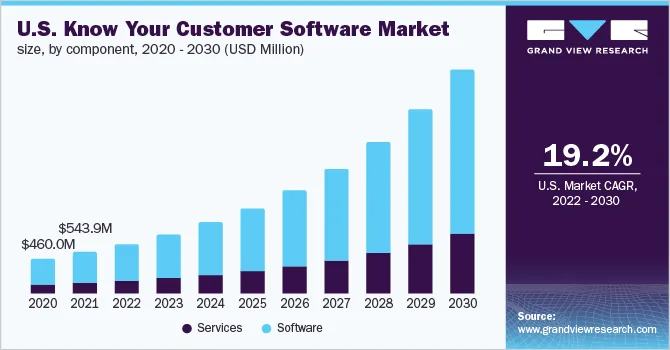
The global know your customer software market size was estimated to be USD 2.93 billion in 2021 and is expected to reach USD 15.81 billion by 2030, expanding at a CAGR of 20.8% over the forecast period. Partnering with the right KYC solution provider will ensure that customer onboarding is not a hassle, but risk-free.

Each market, customer, and transaction has a unique regulatory, compliance, and fraud profile that must be navigated, and it is not uncommon for jurisdictional and fraud pattern differences to create challenges in an organization’s due diligence process. KYC solutions are fast becoming an essential to reduce friction and verify faster and more accurately.

Speed, accuracy, and security define effective KYC, yet choosing a partner isn’t always simple. You need workflows that scale across markets and risk tiers. This is where ChainIT strengthens your process by delivering secure, rule-driven verification across multiple providers with flexible orchestration aligned to your risk appetite.

Understanding KYC Service Providers and Market Landscape

It’s important to choose the right KYC Service provider for secure, fast onboarding. Understanding KYC verification depth, compliance scope, and integration flexibility helps you lower risk and enhance customer experience.

What Does a KYC Service Provider Do?

A KYC service provider is a third-party service organization that assists your business to facilitate the identification of your customers and help you stay compliant with the regulatory requirements. These service providers can offer KYC AML Compliance services that include document verification, biometric authentication, continuous monitoring and risk scoring.

ChainIT enables users to consolidate information from various sources of verified data into one chain-based extremely auditable ecosystem. It also allows businesses to run centralized workflows and reporting while simultaneously keeping a KYC-specific audit of each type of activity.

Market Trends and Growth in KYC Industry

The KYC industry is rapidly evolving, driven by technology adoption and changing customer expectations:

AI used in at least one business function

  • 78% of organizations currently use AI in at least one business function, up from 72% in early 2024 and 55% a year ago.
  • According to the FBI’s Internet Crime Report 2024, the bureau received 859,532 cyber-crime complaints in 2024. This is a decrease of only 2.4% from the previous year and is an ongoing threat for fraud that is more likely to happen if you have not onboarded a customer using AML compliant and robust KYC procedures
  • 71% of consumers anticipate personalized interactions with providers and 76% are likely to change providers if their experience is subpar. As a result, a frictionless onboarding process is more crucial than ever.

These trends underline the importance of selecting a KYC verification provider that balances compliance, fraud prevention and customer experience.

Why Selecting the Right Provider Matters?

Partnering with a wrong KYC verification provider will cause slow customer onboarding, higher operational costs, and regulatory fines. Inconsistent KYC checks can also weaken your customer confidence.

ChainIT’s modular orchestration platform allows you to plug in to multiple KYC providers with ease. Centralize KYC decisions, remain compliant, and make sure your business scales while lowering fraud risk and friction.

Pre-Selection Steps to Define Business Requirements

Selecting the right KYC service provider involves a multi-step process to align with business needs and customer base. Consider the following before making your choice.

Map Your Use Cases and Risk Appetite

  • Map out the target audiences, transaction types and industry-specific requirements you want to KYC.
  • Some industries or use cases, such as banking or cryptocurrency, require higher KYC verification intensity.
  • In these higher-risk scenarios, ChainIT helps teams adjust KYC depth through a flexible, pluggable architecture that supports different verification tiers instead of a one-size-fits-all approach.

Regulatory and Geographic Compliance Coverage

  • Verify that the KYC provider’s services cover all the geographies you work in and all the privacy, AML, and regulatory directives that apply to your business.
  • To address these regional differences, ChainIT uses an adaptive compliance layer that supports plug-and-play integrations and helps manage multi-jurisdictional KYC safely.

Integration and Technical Compatibility Factors

  • Assess the SDKs, APIs, modularity, and integration compatibility with your tech stack.
  • ChainIT integrates with most KYC solution providers to allow plug-and-play integrations from your app of choice without disrupting your existing systems.
  • This also ensures that you always have one orchestration layer that can consistently and streamline data flows.

Security, Privacy, and Data Handling Standards

  • Data security is a major concern with KYC verification. Evaluate the encryption standards, access controls, and certifications that the providers have to offer.
  • ChainIT’s encrypted orchestration flow means KYC workflows are always fully secured, auditable, and at scale so that your customer’s data is always safe and your business operations remain efficient.

Evaluating Key Factors in KYC Provider Selection

Businesses should evaluate KYC service providers on practical criteria. Creating a vendor scoring system that spans performance, compliance, integration and operations will enable businesses to make the best decisions for their organization.

Identity Verification Accuracy and Fraud Prevention

  • Accuracy and robust fraud prevention capabilities are paramount. Advanced fraud detection techniques, such as biometric matching, AI-powered document verification, and multi-factor authentication, should be prioritized for higher accuracy.
  • ChainIT’s orchestration capabilities can consolidate and leverage multiple providers’ fraud prevention data to reduce false positives and enhance the accuracy of fraud detection.

Speed, Latency, and Performance Optimization

  • Speed and low latency are vital for a smooth customer experience and operational efficiency. Verify response times, real-time processing capabilities, and throughput benchmarks.
  • By intelligently managing verification workflows, ChainIT ensures that onboarding and KYC processes stay responsive, even during peak loads, improving customer experience and operational efficiency.

Risk-Based and Workflow Adaptability Parameters

  • The verification standards have to change according to different use case requirements. Providers should accommodate conditional workflows and risk-tiered verification processes.
  • ChainIT’s Business rules engine enables workflows to adapt seamlessly to low, medium, or high-risk scenarios, aligning verification processes with your business requirements.

Scalability, Reliability, and Operational Resilience

  • Scalability is essential for accommodating future growth. Evaluate providers’ infrastructure scalability, uptime guarantees, and redundancy features.
  • ChainIT’s intelligent routing of verification requests across multiple providers can ensure continuous operation and high availability, even in the event of partial system failures.

Compliance, Auditability, and Reporting Controls

  • Digital Audit trails and reporting capabilities are often necessary to support compliance needs. Assess providers’ compliance certifications and reporting features.
  • ChainIT can aggregate logs from all connected KYC verification providers into a unified, auditable dashboard, simplifying compliance management and internal reporting processes.

Vendor Transparency and Reliability Evaluation

  • Reliability and transparency are critical when evaluating providers. Examine certifications, references from other clients, and disclosure practices.
  • Here, ChainIT provides a unified visibility layer that empowers you to evaluate provider transparency and make informed and confident decisions.

Pricing Models and Cost Predictability

  • Understanding the pricing models of KYC verification providers is critical to cost management and budget predictability. Providers often use per-check fees, subscription models, or a combination of both.
  • For clearer budgeting, ChainIT lets teams see costs across multiple KYC providers at a glance, enabling smarter decisions and more predictable verification expenses.

Support, SLAs, and Integration Assistance

  • Support and SLAs are important factors to ensure successful onboarding and effective troubleshooting.
  • With ChainIT’s vendor management module, teams can oversee SLAs and manage escalations across all KYC providers, ensuring timely issue resolution and consistent operational standards.

Implementing a Stepwise KYC Vendor Selection Framework

An evaluation framework allows companies to narrow down finalists, objectively score providers and select the best-fit KYC service provider that can support business operations, compliance and growth.

Vendor Shortlist and Weighted Evaluation Model

  • Begin by compiling a shortlist of KYC verification vendors that meet your pre-established criteria.
  • Define weighted evaluation criteria such as coverage, accuracy, speed, integration complexity, and cost. Use a scoring matrix or comparison table to visually represent rankings.

Conducting a Proof of Concept (POC) Phase

  • Conduct a limited live test to evaluate the provider’s performance in real-world conditions, closely monitoring false positives, latency, and workflow impact.
  • ChainIT’s orchestration platform allows plug-and-test capabilities, so you can quickly benchmark and test multiple KYC solutions in parallel without disrupting existing workflows.

Reviewing Legal, Contractual, and Exit Clauses

  • Thoroughly review key contract clauses, including liability, performance guarantees, and data portability.
  • ChainIT’s data portability and transition management enable easy provider switching or scaling without compliance or workflow disruption.

Finalizing Decision and Implementation Roadmap

  • With a chosen provider, develop a detailed implementation plan, including governance checkpoints, stakeholder buy-in, and training requirements.
  • Using a robust identity orchestration platform, you can ensure zero downtime during provider migration and maintain consistent KYC verification processes across the organization.

KYC Implementation Checklist and Continuous Optimization Practices

With the right process in place, you can enable easy and fast onboarding, seamless KYC integration, continuous compliance, efficient operations and ongoing optimization to achieve long-term success and scalability with your identity verification solution.

  • Security and compliance review before KYC goes live: Identify any potential security gaps, verify that you’re in compliance with all relevant regulations, and that your provider is ready to start before you officially go live.
  • Ongoing verification performance monitoring and optimization: Optimize operations in real time with ChainIT’s dashboards for verification speed, accuracy and uptime.
  • KYC processes governance, review and optimization: Check internal governance, policy compliance and workflow efficiency. Perform a periodic review of your processes and workflows and fine-tune them as needed.
  • KYC data retention and re-KYC schedule optimization: Design data retention and re-verification schedules to maintain compliance with all regulatory requirements and ensure data quality and accuracy.
  • Annual KYC vendor review, optimization and scalability planning: Benchmark your vendors’ performance and SLA, identify emerging risks and processes, and seek out new capabilities for your KYC solution for business to meet your goals.

KYC Basics: A Quick Guide to Understanding Identity Verification

KYC shouldn’t be complicated.

You’re verifying two simple things:

  • Is this person real?
  • Are they allowed to use your platform?

That’s it.

But the industry managed to turn those two questions into a maze of slow workflows, document uploads, time-outs, friction, and guesswork while fraud kept getting easier.

So let’s reframe the entire conversation.

Here is what KYC Verification actually is, what it was supposed to be, why it struggles today, and how ChainIT approaches verification through verified truth rather than assumptions, building the version of KYC the industry should have created in the first place.

Why KYC Exists in the First Place?

The global financial system doesn’t run on documents, names or screenshots. It runs on verified identity; confirmation that the person behind a transaction is who they claim to be.

Regulators require KYC for one reason: If identity isn’t verified, criminals blend in with customers. And today, criminals have more tools than ever. Not just one kind of fraud but dozens of them:

  • Synthetic identities built from fragments of real people
  • AI-generated faces capable of passing low-level checks
  • Stolen IDs sold on the dark web for pennies
  • Bots opening accounts faster than manual reviewers can respond

Traditional KYC struggles because it was designed in an era where fraud required effort but now fraud is industrialized.

Where legacy KYC relies on documents anyone can fabricate, photos anyone can borrow, and workflows that assume the user is acting in good faith, ChainIT removes assumptions and replaces them with layered verification based on reality through biometrics, liveness, location, device integrity, and immutable evidence.

But before we get into that, let’s look at what KYC traditionally looks like.

How KYC Traditionally Works?

Here’s how most systems handle KYC today:

Step 1: Capture Identity Information

The platform collects:

  • Name
  • Date of birth
  • Address
  • Government-issued ID

For many systems, this is where the “verification” effectively ends. If the information looks plausible, it moves forward.

Modern KYC platforms improve this but each has trade-offs.

For example:-

Some vendors use selfies or fingerprints, which solve impersonation problems but rely on stored biometric templates; a risk if their servers are ever breached.

Others use facial mapping, which increases accuracy but may still store sensitive user photos or allow spoofing if liveness checks are weak.

Some platforms incorporate database checks, which catch expired or invalid IDs, but struggle when criminals use deepfake images that “appear” legitimate.

ChainIT takes a different path:

It uses biometrics, but validates them against authoritative sources, checks device integrity, confirms location, and anchors results to an immutable ledger. Importantly, ChainIT never stores personal data on vulnerable servers, users maintain control of their own identity.

This is where the gap between “traditional KYC” and “verified identity” begins.

Step 2: Verify the ID and the Person Holding It

Traditional KYC often looks like this:

  • Accept a photo of an ID: The system lets the user upload a picture of their driver’s license or passport – which could be real, borrowed, stolen, edited, or AI-generated.
  • Run OCR: OCR (Optical Character Recognition) is software that reads the text on the ID like the name, date of birth, or address and converts it into digital data.
  • Parse the text: Interpreting the text OCR extracted, which doesn’t confirm whether any of that is legitimate, it just organizes the data.
  • Approve if nothing looks suspicious: Most traditional systems only fail if the photo is obviously low-quality or the text doesn’t line up. If the ID looks correct, it often gets approved, even if it’s stolen or fake.

Scammers love this because:

  • Photos can be stolen
  • IDs can be Photoshopped
  • Borrowed IDs often pass visual inspection
  • OCR only checks that the text is readable, not that the document is authentic
  • AI-generated IDs now look shockingly real

ChainIT solves these weaknesses by asking deeper questions:

  • Is the document authentic?
    ChainIT checks for embedded security features, data consistency, issuing authority validation, and signals of manipulation that a human reviewer could never detect.
  • Is the person holding it the real owner?
    ChainIT uses biometric matching not just comparing photos, but comparing the biometrically verified user with the identity documented in official sources.
  • Is the person physically present?
    Liveness is validated through micro-expressions, depth detection, and behavioral markers that AI masks or static images cannot reproduce.
  • Does the person’s location make sense?
    Example: an ID issued in Texas shouldn’t be “verified” from a device spoofing GPS coordinates in Eastern Europe.
  • Does the device show signs of tampering?
    Rooted phones, emulators, multiple VPN hops, or anomalies in device hardware signals indicate potential fraud.
  • Does the biometric scan match a real human face?
    Deepfakes, AI masks, and reconstructed digital faces leave artifacts that ChainIT’s system is trained to detect.

If anything in this chain doesn’t line up, the process stops instantly, not after onboarding, not after a transaction, not after a chargeback.

Step 3: Run Due Diligence

Once identity is confirmed, the next step is understanding risk.

Here are the core components, explained simply:

  • Sanctions: Lists of individuals or entities legally restricted from financial activity.
  • Watchlists: Databases of people with prior financial crime risk or suspicious patterns.
  • PEPs (Politically Exposed Persons): Individuals whose public roles increase the risk of corruption or illicit influence.
  • High-risk jurisdictions: Regions associated with money laundering, terrorism financing, or weak regulatory oversight.
  • Suspicious activity history: Behavioral red flags across accounts or institutions.

ChainIT automates the entire KYC verification process, scoring, categorization, and logging, and anchors results to an immutable audit trail so compliance teams never have to wonder when or how a risk decision was made.

Step 4: Continuous Monitoring

Why KYC shouldn’t be one-and-done

Fraud doesn’t respect renewal cycles.

A user can pass verification in January and commit fraud in March.

Identity can be stolen.
Devices can be compromised.
Patterns can change.

This is why ongoing monitoring matters.

ChainIT tracks meaningful behavioral signals such as:

  • Device changes: Is the user suddenly logging in from a new device with suspicious characteristics?
  • Transaction spikes: Are they suddenly moving money differently?
  • Impossible travel: Logging in from New York and Hong Kong within minutes.
  • Identity reuse patterns: The same face appearing across multiple unrelated accounts.
  • Location spoofing: GPS manipulation or VPN stacks attempting to hide origin.
  • Behavioral inconsistencies: Sudden changes in typing speed, camera drift, or verification patterns.

These signals are evaluated in real-time, not quarterly, giving compliance teams immediate insight instead of delayed reports. 

Step 5: Immutable Compliance Records

Audits become difficult when identity evidence is:

  • stored in PDFs
  • scattered across multiple teams
  • inconsistent
  • manually editable

Why is this a problem?

Because:

  • PDFs can be modified
  • Screenshots can be manipulated
  • Records can be misplaced
  • Version history may not exist
  • Teams spend hours tracking down evidence

ChainIT replaces this chaos with Validated Data Tokens (VDTs) cryptographically sealed identity attestations stored on an immutable ledger.

In simple terms, VDTs are:

  • Immutable: Once written, they cannot be altered, removing doubt during audits.
  • Auditable: Every verification step has a timestamp and origin trail.
  • Shareable: Organizations can verify authenticity without accessing raw personal data.
  • Privacy-preserving: Sensitive information stays with the user, not on centralized servers.

KYC Compliance becomes predictable instead of painful.

Types of KYC Explained

KYC comes in various forms, each designed to verify identity efficiently and securely, helping organizations balance risk, compliance, and user convenience.

  • Traditional KYC: Physical documents, in-person review. Reliable but slow and prone to human error.
  • Digital KYC: Document upload, biometrics, automated checks. Faster but varies widely in fraud resistance.
  • Video KYC: An agent or automated system verifies identity through live or recorded video.
  • Biometric KYC: Verification through fingerprints, facial recognition, or other unique traits.
  • Simplified KYC: Lower-effort checks for low-risk or low-value accounts that later escalate to full KYC if needed.

ChainIT’s KYC: There are excellent KYC vendors offering strong implementations in each category. ChainIT KYC simply takes these foundations and adds deeper verification layers of biometrics tied to official data, device integrity, precise location, immutable records, and privacy-preserving architecture.

Where KYC Fails (And Why Fraud Thrives)

Even with KYC in place, gaps in processes, oversight, and adaptability can create vulnerabilities, leaving room for fraud to exploit weaknesses.

Overreliance on Documents

If verification revolves around documents alone, you’re vulnerable. Why? Because documents can be:

  • Stolen
  • Borrowed
  • Altered
  • Purchased
  • AI-generated

When identity checks stop at “Does the ID look legitimate?”, fraud wins.

Poor User Experience

Users abandon verification when it feels:

  • slow
  • confusing
  • repetitive
  • invasive
  • unreliable

ChainIT reduces friction by minimizing steps, automating decisions, and removing redundant uploads while maintaining strong verification layers.

Patchy Global Compliance

Every region has its own rules. Failure to adapt leads to gaps, fines, or rejected onboarding.

ChainIT supports flexible, rules-based verification workflows that automatically meet regional requirements without manual reconfiguration.

Storing Sensitive Data

Some KYC providers store:

  • face images
  • ID photos
  • biometric templates
  • raw personal data

These become targets for attackers.

ChainIT avoids this entirely by using selective data sharing and decentralized identity tokens, meaning users keep control of their own identity. 

The Future of KYC

Emerging KYC approaches emphasize resilient, privacy-aware identity verification services that adapts to changing risks and supports consistent, user-friendly authentication everywhere.

AI-Enhanced Fraud Detection

  • AI creates fake identities but it also exposes them.
  • ChainIT uses AI to detect micro-anomalies in documents, faces, behavior, and devices that humans cannot see.

Decentralized Identity & Blockchain

  • Users shouldn’t need to re-upload the same documents repeatedly.
  • VDTs allow verified identity to be reused safely:
    • no raw data exposure
    • no repeated uploads
    • no dependency on centralized storage
  • Verification becomes portable and tamper-proof. 

Privacy-First Verification

  • Modern laws demand minimal data retention.
  • ChainIT verifies attributes such as age, identity, or eligibility without storing unnecessary personal details.

Interoperable Digital Identity

Authenticate once.
Use everywhere.

ChainIT supports a model where identity travels with the user securely, minimizing repetitive friction across platforms. 

Why ChainIT Stands Apart?

ChainIT uses layered verification based on verified truth:

  • Biometrics: Confirms the real human behind the identity.
  • Real liveness: Proves the user is physically present, not a mask or deepfake.
  • Accurate location: Confirms authenticity and prevents geographic spoofing.
  • Hardware integrity checks: Detects compromised devices or emulators.
  • Immutable blockchain records: Locks verification evidence permanently.
  • Privacy-preserving identity tokens: Keeps sensitive data with the user, not on corporate servers.

Every decision is backed by proof – not trust.

How 7000 Ghosts Stole $200 Million?

Introduction

When people think of identity fraud, they imagine a stolen credit card or someone ordering electronics under a fake name.

But identity fraud is much more than that. Imagine a decade-long criminal enterprise, spanning multiple states, multiple banks, and thousands of fake “people” none of which ever existed.

In one of the most staggering fraud cases in U.S. history, criminals built synthetic identities, carefully constructed characters that existed only on paper and then used them to steal more than $200 million from financial institutions.

This isn’t some urban legend but an actual federal case that exposes the biggest blind spot in traditional identity verification.

The Crime Ring Made Up of Ghosts

In 2013, federal prosecutors in New Jersey announced the takedown of a massive criminal organization responsible for creating over 7,000 synthetic identities, then using those identities to obtain over 25,000 fraudulent credit cards and stealing more than $200 million from financial institutions.

This wasn’t a single hacker or a sloppy amateur but the work of a highly coordinated network. That built their ‘people’ by following these intricate steps carefully.

They combine a real Social Security Number (often from a child or deceased person) with a fake name and birth date, added in an address that was either real or made up, opened accounts with tiny credit limits, paid bills on time to generate a pristine credit score, slowly expanded into massive credit lines, then when the time was right they would max out every credit line then vanish.

The bank thought none the wiser for they saw a valid SSN, a name that matched their documentation (because they wrote it), a developing credit history and responsible payment behaviour. These were essentially ghosts with excellent credit.

The criminals became identity engineers, crafting artificial humans with better credit than many actual citizens. AND THE SYSTEM APPROVED THEM.

Why It Worked: The Ongoing Failure of Traditional Verification

Here’s the uncomfortable truth:

Every system they touched “verified” their identity.

Banks, lenders, credit bureaus, retailers all verified it. Why? Because traditional KYC checks the document, not the human.

Also Read: What Is KYC Verification?

Every step they used is the same step millions of institutions still rely on today:

  • Does the ID look correct?
  • Does the SSN match a valid number range?
  • Does the address exist?
  • Does the name match the document?
  • Does the credit file seem accurate?

This fraud ring exploited a fundamental truth about legacy identity systems:

If the paperwork is consistent, the system assumes the person is real.

  • No biometrics.
  • No liveness.
  • No authoritative database matching.
  • No device integrity.
  • No location validation.
  • No continuous monitoring.

Just trusting a failing system.

The Federal Reserve Admits the Problem Is Systemic

Years after the takedown, the Federal Reserve published a landmark white paper explaining how synthetic identity fraud works and why it’s so dangerous.

Source: Federal Reserve – “Synthetic Identity Fraud in the U.S. Payment System”

The Fed concluded:

  • Synthetic identity fraud is the fastest-growing financial crime in the U.S.
  • Scammers exploit gaps between different identity systems
  • Synthetic identities can persist for years without detection
  • The financial system is not designed to detect “people who don’t exist”
  • Total losses exceed $6 billion annually (now estimated much higher)

The report states clearly: “Synthetic identities are difficult to detect because they blend legitimate and fabricated information to create a person who does not exist.”

In other words: Paperwork is no longer proof.

The Moment Everything Collapsed

The fraud ring got away with it for nearly a decade. What exposed them? Not a bank, credit bureau or KYC system. It was an investigation triggered by odd patterns of address recycling and a tip from a credit issuer who noticed multiple identities connected to the same mailbox.

It took a massive culmination of human suspicion, law enforcement, subpoenas, cross-institutional reviews, and forensic accounting. Dedicated teams that discovered years too late, and by then, the damage was done.

Why This Case Matters Still Matters Today?

This crime ring wasn’t a fluke but a blueprint that fraud rings still use today.

Synthetic identity fraud is now the #1 cause of credit card losses in the U.S., a top concern for FinCEN, a major threat flagged by the Federal Reserve, Experian and LexisNexis and expanding at an even faster rate due to generative AI tools.

The identities are more convincing, the documents are cleaner, the digital footprints appear more human, onboarding flows are easier to exploit and traditional KYC is still just checking:

“Does this ID look correct?”

Instead of:

“Is this a real person?”

Don’t be the next victim.

This case proves ONE thing:

Identity can be faked.

Presence cannot.

If the financial institutions in this case had used ANY of the following:

  • biometric face match tied to authoritative sources
  • real-time liveness
  • device authenticity
  • location validation
  • immutable audit trails
  • continuous behavioral monitoring

None of these synthetic identities would have passed onboarding.

  • A fake person cannot:
  • appear in front of a camera
  • pass multi-layer liveness detection
  • match authoritative government database biometrics
  • originate from a device with a consistent forensic profile
  • build a continuity of real-world presence

Documents can be forged.

“Digital humans” can be engineered.

But the existence of a real person cannot be imitated at scale.

This is the single greatest blind spot in traditional identity verification and legacy KYC.

And the reason the criminals behind this $200M operation thrived for so long.

If this case happened today, ChainIT’s layered identity verification solution would have stopped it at step one.

Because synthetic identities fail when a system requires:

  • A real person, not a paper person
  • Biometric match to authoritative identity datasets
  • Verified liveness
  • Device integrity and geolocation consistency
  • Immutable Verification Tokens that cannot be cloned or recycled
  • Ongoing behavioral monitoring

ChainIT does not just verify documents.

It verifies humans, presence, location, and authenticity – the exact blind spots exploited in the $200M case.

KYC built on paperwork will always lose to criminals who know how to forge paperwork.

Criminals can fake documents, data, and even digital humans, but they cannot fake a real, living, present person. Had these ghosts been asked to prove their existence, the story would’ve ended on page one.

What Is KYC Verification: Comprehensive Guide for Decision Makers

Introduction

As data-oriented digital finance grows, regulators work to strengthen Anti-Money Laundering (AML) requirements. Through this KYC verification has become a foundational part of digital verification and compliance. The momentum is evident, with the 2024 Global KYC market driven by solutions holding 70.5% share while services account for 29.5%, reflecting rising demand for automation-led verification.

Banks and fintech startups were the early adopters, followed by crypto platforms and SaaS businesses, where KYC compliance is a step in ensuring users are who they claim to be before accessing financial or sensitive services. It plays a critical role in fraud prevention, risk management, and compliance.

ChainIT, provides enterprise-grade identity management solutions, as a one-stop KYC verification infrastructure, document validation, biometric validation, and real-time monitoring allowing organizations to provide the security and scalability necessary to onboard users.

By the conclusion of this guide, you will know the meaning of KYC verification, how this is done, the various verification types, the essentials of compliance, the obstacles that exist, and how digital identity verification is likely to evolve in enterprise ecosystems.

Why KYC Verification Is Critical Today?

The digital financial ecosystem is growing more than ever before, and so are threats. 

Global Compliance Requirements

KYC is required by regulators around the globe to prevent financial crime:

  • FinCEN (U.S.): This mandates Customer Identification Programs (CIP) for all financial institutions.
  • FATF (International): Establishes AML and KYC requirements to be adhered to by more than 200 jurisdictions.
  • PSD2 (EU): Imposes intensive customer authentication of financial transactions.
  • RBI (India): Requires eKYC and re-verification of banks and digital wallets periodically.

According to Experian, in 2024, there was a 60% increase in false identity cases in the UK, with “synthetic fraud” making up nearly ”one-third” of all identity-fraud cases.

Consequences of Non-Compliance

Those organizations that do not engage in correct KYC are liable to heavy regulatory fines, Customer data exposure, increased fraud, and brand damage. In 2023, global KYC and AML non-compliance penalties exceeded 5 billion worldwide.

ChainIT’s Contribution

ChainIT enables compliance-ready ecosystems through:

  • Automated KYC pipelines integrated with AML databases.
  • Real-time monitoring for fraud detection.
  • Configurable workflows meeting regional KYC and data privacy standards.
  • Immutable identity tokens that support audit-friendly reporting

Synthetic identity fraud is estimated to cost up to US $23 billion by 2030, with a 7% increase in loss rates in the first half of 2024 alone.

How the KYC Verification Process Works (Step-by-Step)

KYC involves key steps that help verify a customer’s identity and ensure their information remains accurate and authentic throughout their lifecycle.

Step 1: Customer Identification Program (CIP)

KYC identification in the initial stage is done to verify the core details of the customer and the validation of these details to determine their legal identity before services can be rendered to the customer in financial or digital terms. This is the initial move that makes sure that the customer is who they say they are.

Organizations collect core data such as:

  • Full name
  • Date of birth
  • Address 
  • ID proof (passport, driver’s license, etc.)

Data verification programs and API validates the information against the government and financial databases. As an example, India has eKYC that is based on Aadhaar, which is instantly validated using UIDAI databases.

ChainIT manages data capture, validation, and integration with onboarding systems of the enterprise, eliminating manual error, and onboarding time is reduced by more than 60 times.

Step 2: Verification of Documents and Identity

The step which comes after capturing basic details, is authenticating the documents provided and ensuring that the actual customer is who they are by the use of digital tools. This measure will guard against fraudulent creation of an account as well as impersonation.

Modern KYC leverages:

  • Reading a Document using Optical Character Recognition (OCR).
  • Biometric Check like facial or fingerprint identification.
  • Liveness Detection to eliminate spoofing.

To use document AI as an example, Checkout.com can check the authenticity of IDs in a couple of seconds. Similarly, ChainIT utilizes real-time fraud document analysis and biometric matching, using fraud detection engines, which are based on AI to ensure authenticity..

Step 3: Customer Due Diligence (CDD) and Risk Assessment

Once the identity is verified, the organizations will evaluate the risk levels of the customers to maintain their compliance in the future and prevent possible risks like money laundering or terrorist money laundering.

After identity confirmation, risk profiling begins:

  • Basic Due Diligence (BDD): In the case of low-risk customers (e.g., salaried professionals).
  • Enhanced Due Diligence (EDD): For high-risk organizations such as politically exposed persons (PEPs) or traders across borders.

ChainIT provides global sanctions and PEP lists to automate CDD by using automated scoring models.

Step 4: Ongoing Monitoring and Re-KYC

The KYC verification process is not a one-time affair. Detecting anomalies is done by constant observation, e.g., spikes in transactions or location change.

Another benefit of automation is that it helps companies create re-KYC cycles (for example, after every two years of active use of a user) and detect suspicious trends in real-time. ChainIT offers protection and compliance using an automated workflow.

Step 5: Reporting and Recordkeeping

The information must be kept in a secure way that will allow an audit by the regulators. The global standards, like FATF, provide that the KYC records remain at least five years following the account closing.

ChainIT on-demand architecture provides non-repudiable digital audit trails and automated compliance reports, and encrypted records of data, which are in accordance with the data privacy regulations.

Types of KYC Verification

KYC verification comes in various types, as each helps organizations solve specific compliance challenges and support secure, efficient onboarding across different customer and regulatory requirements. Let’s understand each one of them.

Traditional (Offline) KYC

The offline KYC is the process where documents are submitted physically and are verified in person, this is a process that is still desirable in the areas where manual due diligence is a prerequisite.

Customers provide a hard copy of their ID proofs, address documents, and photographs that are, in turn, validated by compliance officers or agents.

Though it offers in-person verification , it is time-consuming, expensive, and subject to human error. Nevertheless, it is still practical to customers in parts of the world that do not have good digital infrastructure or where legislation requires physical presence (e.g., opening bank accounts in rural areas).

Digital (Online) KYC

Digital KYC or eKYC is a system that does not require any physical documentation because it uses electronic data verification systems. Users post identity documents, scan their faces, or take a biometric scan, and the information is compared against secure databases of the government or other institutions in real time.

This technique will significantly save onboarding and operational costs and will be highly accurate. One such case is eKYC based on Aadhaar in India, where instant verification can be done using the UIDAI database and it is changing the way financial institutions onboard customers.

This is where advanced automation comes in, and ChainIT supports it with API-driven, OCR-enabled, and biometric-ready verification to power fully digital KYC aligned with AML and GDPR.

Video KYC (V-KYC)

Video KYC is a technique of identifying a customer based on live or recorded video communications. This method became popular during the pandemic as it combines security, convenience, and regulatory compliance. It also helps institutions verify users remotely while maintaining a high level of confidence.

For smoother customer interactions, ChainIT delivers facial mapping, liveness validation, and compliant video KYC flows designed to reduce drop-offs and meet SEBI and RBI requirements.

Biometric KYC

Biometric KYC is the authentication of users by unique physical characteristics, fingerprints, facial recognition, iris scan, or voice patterns. These biometrics establish a non-copyable layer on identity, which enhances the entire KYC procedure.

This approach enhances verification by offering:

  • Faster biometric scans
  • No document uploads
  • Higher security levels
  • Broad fintech adoption

ChainIT combines state-of-the-art biometric verification APIs, which provide fraud-resistant identity verification, that can be deployed to global businesses without considering speed or privacy.

Also Read: Benefits of Identity Verification Platforms

Simplified KYC (for Low-Risk Accounts)

Simplified KYC is used with customers with low levels of risk exposure, including small retail customers or low-volume transactions. It involves the minimal number of documents and verification inspections and is based on compliance principles.

This model will facilitate the process of financial inclusion through rapid onboarding of underserved groups, but will not lose sight of the risk escalation. As the activity grows, the customers may be automatically upgraded to full KYC.

Example: Mobile payment applications and neobanks have a common setup of simplified KYC to enable fast wallet activation and transition to full KYC when transaction limits are met.

Common Pitfalls and How to Avoid Them

Issues like poor data management, weak UX, and limited regulatory coverage continue to challenge organizations. An automated, modular KYC system helps prevent these gaps, strengthens compliance, and reduces exposure to fraud. This matters more than ever, as consumer fraud losses in the U.S. exceeded US $12.5 billion in 2024, marking a 25% increase from the previous year.

Overreliance on One Verification Process

  • Issue: The reliance on documents or biometrics will increase the risk of fraud. 
  • Solution: Multi-layered verification is more secure, it includes checking data, biometrics, and behavioral analytics.

Unsatisfactory User Experience

  • Issue: A complicated verification process may lead to lost customers. 
  • Solution: The UX automation and mobile-friendly KYC boost the rates of conversion.

Insufficient Regulatory Coverage

  • Issue: International operations require adherence to diverse KYC guidelines, yet many businesses fall short in meeting these varying regulatory expectations.
  • Solution: Following standardized KYC frameworks strengthens cross-border business relationships and enables organizations to maintain a higher level of security.

Risks of Data Management

  • Issue: Misuse or storage of KYC information poses a cybersecurity threat. 
  • Solution: Role-based access and encryption must be enforced to prevent unauthorized exposure, reduce insider misuse, and keep sensitive information protected across all data interactions.

Future Trends and Innovations in KYC Verification

Technologies such as AI, blockchain, and behavioral analytics are revolutionizing KYC verification. These technologies improve precision, scalability, and client privacy and allow real-time global compliance.

AI and ML in Fraud Detection

Machine learning algorithms have proved to identify anomalies and forged documents more quickly than their human equivalents. Software vendors such as Sumsub and ChainIT utilize privacy-first verification for minimizing human error.

Blockchain and Decentralized Identity (SSI)

The self-sovereign identity system enables the management of user data securely across solutions. Blockchain offers the guarantee of tamper-proof records, in addition to communication with KYC providers.

Privacy-Centric Compliance

Global regulations like GDPR and the Indian DPDP Act require businesses to adopt privacy-first checks. ChainIT is a user consent tracking and privacy-preserving analytics.

Interoperable KYC Systems

Open and interoperable KYC systems that combine banks, fintech, and regulators through joint digital identity guidelines are the way forward.

ChainIT Vision: Unified AI-driven layer of compliance that enables businesses to build secure, scalable, and global compliant digital ecosystems.

Clicking “I AGREE” is not a Signature, it’s a Liability

Why Are Traditional E-Signature Tools Failing and Why Is Verified Signing Becoming a Legal Survival Requirement?

Digital signing was supposed to make business faster, safer, and more convenient. Instead, it created a new problem: 

  • Anyone can click a button. 
  • Anyone can forge a name. 
  • Anyone can pretend to be the “authorized signer.” 
  • And in court, none of that holds up the way people think it does. 

Every month, somewhere in the U.S., a business discovers the same painful truth: “A signature with no verified signer is barely a signature at all”. This is why disputes, forged approvals, unauthorized deals, and multimillion-dollar lawsuits keep hitting companies that rely on old e-signature platforms. The court filings are public, and the pattern is unmistakable. 

E-Sign Tools were built for Speed, not Truth

Most legacy e-signature tools were designed around convenience, not verification. 

  • Send the form 
  • Click the box 
  • Type your name 
  • Done 

Fast? Yes. Legally reliable today? Not even close. 

Here’s Why:

  • “Signatures” aren’t tied to a real human.

If someone gets into an email inbox, they can sign anything.

  • “IP Address” and “Email Ownership” are not identity proof.

Courts have already thrown out multiple contracts built on these weak signals.

  • Anyone can claim: “That wasn’t me.”

And when that doubt exists, the contract becomes vulnerable.  

Clicking is not verification, 
Typing is not authentication,
Convenience is not compliance.

Signing without Verification is a Legal Weak Point

Judges, regulators, auditors, and lawyers are all agree; If you cannot prove WHO signed, WHERE they signed, HOW they signed, and that they HAD THE AUTHORITY to sign. The contract is exposed! 

Legacy e-signature platforms don’t prove any of that. They log a timestamp, an email, an IP address but they do NOT prove the identity, authority, intent, or location of the signer.

They cant determine whether a human or AI / bot performed the action or if the device was compromised or tampered with or if the contract is even being signed under valid organizational authority. This is why lawsuits keep happening, because every gap in verification is an opening for fraud, dispute or denial.  

The Legal System exposes danger in Signature Assumptions 

Recent rulings and research show the same pattern:  

    • A California appellate court ruled that electronic signatures are not self-authenticating. Identity must be proven with technical evidence. Without identity verification and authenticated execution, the signature is not enforceable.
    • The Ninth Circuit rejected an online click agreement contract because the company couldn’t prove identity or intent. A click alone was ruled insufficient as the court required clear, verifiable evidence of consent tied to the real user.
    • A UNC legal study found that the majority of e-sign disputes stem from authentication failures. Platforms cannot reliably prove who signed. The lack of verifiable identity, intent, and execution makes digital agreements vulnerable to challenge and non-enforcement in court.
  • Complaints and Losses over the Last Five Years
    • The FBI reported over $12.5 billion in losses tied to impersonation, business email compromise and identity-based digital fraud in 2023, a direct consequence of systems that assume unverified digital actions, including signatures, instead of verifying it. 

These aren’t outliers, they’re symptoms of a systemic problem. Over 70% of e-signature disputes stem from the same failure: the platform cannot verify who actually signed. And with identity fraud surging with $27.2 Billion lost in 2023 alone, the danger of relying on unverified signatures is only getting worse illustrating how a signature or checked box alone is not proof. Truth is.

Legacy E-Signature Weaknesses

Verified Signing is the new standard 

This is where Pactvera and the ChainIT infrastructure fundamentally change digital agreements. Instead of trusting the signer, Pactvera™ verifies the signer. Instead of assuming the signature is valid, Pactvera proves it is. 

Pactvera verifies: 

  • Real human presence (biometric liveness + face match) 
  • Identity (verified to authoritative government sources) 
  • Device integrity (unique device ID + anti-spoofing) 
  • Geolocation & network consistency
  • Organizational authority (ARP — Authority Resolution Pactvera) 
  • Intent (purposeful, confirmed execution) 
  • Document version (cryptographically hashed) 
  • Immutable audit record (VDT — Validated Data Token) 

Nothing is assumed. 
Everything is verified. 
This creates verified truth, not guesswork. 

This eliminates the core failure point of legacy signing tools which is the possibility of dispute. Because when someone signs using ChainIT, you have proof of WHO (live biometric match), WHAT (the exact document version that was signed as an immutable Validated Data Token), WHEN (precise timestamp verified by blockchain), WHERE (Physical location, validated by GPS and network integrity, On What DEVICE ( known device id, verified the moment of signing), and under what AUTHORITY ( confirmed through ARP as the legitimate organization authority).

This is what legacy tools cannot do and why the lawsuits keep piling on.

Why this matters for Businesses?

Business Benefits of Using e-Signature Platforms

Verified signing eliminates weak points that expose agreements to disputes, fraud and authority gaps. This section explains why stronger identity assurance directly increases legal strength for businesses.

Contracts stop being “disputable.”

Traditional e-signatures create openings for denial: “I didn’t sign that,” “Someone else clicked it,” “That wasn’t my account.” With Pactvera, there’s no ambiguity left to argue. The contract is tied to a real human, at a real moment in time, with real proof, not assumptions. Disputes evaporate because the evidence is definitive.

Fraudulent signatures become impossible.

You cannot fake a liveness-backed, device-verified, GPS-confirmed biometric signature.  

Deepfakes, spoofing, and synthetic identities can fool outdated e-sign tools, but they cannot pass a real-time biometric, device, and location-verified signing sequence. ChainIT locks identity to irrefutable proof.

Organizational authority is validated.

Employees cannot sign beyond their permissions – ARP enforces it cryptographically. 

ChainIT’s Pactvera doesn’t just verify the person it verifies their authority to act on behalf of the organization. Roles, permissions, and ARP (Authority Resolution Pactvera) are cryptographically enforced. 

Courts prefer immutable records.

Blockchain-backed VDTs remove tampering, alterations, and chain-of-custody failures. 

Once a Pactvera agreement is sealed into a Validated Data Token (VDT), it becomes a permanent, tamper-proof piece of evidence. Courts favor immutable evidence because it preserves forensic integrity.  

Every signature is legally fortified.

You’re not relying on trust, you’re verifying with truth. 

Legacy platforms ask courts to trust an audit log. Pactvera transforms a signature from a questionable click into court-ready evidence. Every agreement is built on verified identity, verified authority and verified intent, the foundation judges actually require.

The Future of Signing Needs Verification 

Ai can forge identities, bots can click boxes, emails can be hijacked, deepfakes can mimic voices, sessions can be spoofed. But attackers cannot fake a real human biometric match, verified identity, verified authority, device integrity, a blockchain timestamp or a Pactvera execution flow.

This is why organizations are moving away from “click-to-sign”. Not because it’s inconvenient but because it’s unsafe.

Top 10 Benefits of Identity Verification Platforms

Introduction

Digital interaction starts with a basic question- Who is on the other side? The reply is not clear-cut anymore. Digital access has made the onboarding process very simple but on the other hand, it has also made impersonation equally easy and thus still hard to detect. Nowadays, attackers can use a variety of methods to out-smart the aging verification systems, such as stealing credentials, using deepfake images, creating fake identities and deploying automated bots that can do it before anyone notices.

This is why identity verification has evolved from a routine checkpoint into a survival requirement. A single unverified user can trigger breaches, financial fraud, compliance penalties and rapid customer churn. Once confidence in a system breaks, growth slows and reputational damage becomes difficult to reverse.

Statistics Data on the revenue losses due to unaccountable identity risks

The cumulative global fraud losses now surpass five trillion dollars annually, an effect that is equivalent to every company losing close to five to six percent of its income to unaccountable identity risks. The figures are overwhelming, but the ramifications turn to be very painful as soon as a security breach takes place.

The modern-day businesses require very accurate, fast, and resilient verification systems as the digital threats are surpassing the old tools. The older models are leaving gaps that are easy to exploit hence there is an even greater need for stronger identity signals and tamper-proof validation to stop the more sophisticated attacks.

As this shift becomes essential for secure growth, ChainIT steps in with live biometrics with GPS tracking and blockchain anchored identity records that keep verification resilient, auditable and dependable even under high pressure digital conditions.

Before discussing how the identity verification platforms protect businesses and enable them to grow with confidence, we need to first comprehend the difficulties that come with the unchecked identity.

What are Identity Verification Platforms?

Identity verification platforms confirm whether a person is genuinely who they claim to be. When someone signs up using a name like “John Doe” the platform doesn’t take it at face value. It checks signals like biometrics, document authenticity, device behavior and multi factor validation to ensure the identity matches the real individual behind the screen. These systems act as a validation layer catching inconsistencies before they turn into risk.

Modern verification platforms have evolved far beyond basic ID checks. They perform real-time document scanning, compare information across verified data sources, analyze facial and fingerprint patterns and validate user intent through layered authentication. 

In a typical flow, a user submits their details, the platform verifies them against multiple signals and access is granted only when everything aligns. This protects businesses from impersonation attempts while allowing genuine customers to move through onboarding without unnecessary friction.

With a basic understanding of identity verification platforms, you may wonder why we need them. So let us understand that in the next section.

The Problem: The Hidden Risks Behind Every Digital Interaction

Every digital interaction carries a risk that comes up when there is uncertainty about the identity of the parties involved. This section drives through how fraud, compliance gaps and poor onboarding together bring down business performance silently. 

Fraud Escalation

Weak identity is the breeding ground for fraud. The attackers manage to impersonate convincingly by looking real, they either use forged documents, steal credentials or get synthetic identities that are formed from widely spread personal information. Each successful act of impersonation brings along financial loss, operational disruption and legal consequences that spread throughout the organization. 

Older verification systems make this easier than most companies realize. These systems depend heavily on static information such as IDs, passwords and stored documents that can be duplicated or altered with minimal effort. Without stronger ways to confirm who is behind a digital interaction, businesses unintentionally allow criminals to blend in with legitimate users.

Regulatory Pressure

Regulators now demand that businesses perform identity checks to the highest accuracy instead of making assumptions. GDPR, KYC AML compliance requirements and some data laws applicable to specific sectors put into force that companies to know who their customers are. If a company does not comply with these legal requirements, it will be fined, investigated, and its operations may be restricted, all of which will negatively impact customer confidence. 

The financial effect of regulatory penalties is very large. Non-compliant companies have to deal with higher costs associated with data breaches because they lack proper identity management. The scenario of the continuous expansion of global regulations and the increasing trend of operating in multiple countries simultaneously makes the need for accurate and uniform verification even more urgent.

Customer Churn Due to Friction-Heavy Onboarding

Users want fast and easy onboarding experiences. When verification is complicated, attention-grabbing or slow, they quit before the process is done. A tiny bit of friction can change a possible user into a lost customer.

This creates a tough situation where companies guard their systems with strict verification, but at the same time, they try to make the user experience luxurious and inviting. Meeting these expectations has turned out to be one of the most crucial considerations in the onboarding process of the digital world today.

The Solution Evolution: The Journey of Verification Transformation

The age of identity verification has moved from traditional credit and claim verification methods to fully automated digital ecosystems and has become the paradigm of accuracy, scalability and compliance through constant innovation, automation and dispersed intelligence over the industries.

The Manual Era

At first, identity verification was completely human-driven, relying on the physical presence of the person, the presentation of physical documents and the manual checking of personal data that established the roots of identity assurance.

  • Staff members trained for in-person document verification
  • Video interviews for live identity checks are scheduled ahead of time
  • Physical signatures that are proof of consent and thereby authenticity
  • Reviews of forms submitted manually and then the application of approval processes
  • Time-consuming validation with varying degrees of accuracy

The Centralized Digital Era

Along with the digital revolution, electronic verification which was highly centralized became the sought after option due to its convenience, however, it brought with it security problems using centralized control and insecure data repositories.

  • Uploading scanned copies of identification documents digitally
  • Authentication workflows based on OTPs and consisting of multiple steps 
  • Verification based on personal data checks in the form of questions and answers
  • Databases with centralized control holding millions of user identities
  • Risk of data breaches, leaks, and misuse of data by insiders

The Modern Automated Era

Automation transformed verification by using smart algorithms and biometrics which allowed in user onboarding faster and error less so in better fraud detection in digital networks.

  • AI-driven face recognition technology and biometric identification
  • Sophisticated liveness testing to make sure the user is present
  • Instantaneous document checking for genuineness evaluation
  • User device fingerprinting to analyze behavioral similarity
  • Fraud detection signals are provided by a computerized system that makes quicker decisions

The Decentralized Identity Era

The verification system experienced its most sophisticated stage with the introduction of decentralized identity structures that gave users complete power over their data and also allowed infallible blockchain-secured confirmation through biometric and intent-based verification.

  • Real-time biometrics confirming user identity
  • GPS-based identity intent approval processes
  • Unalterable blockchain-based identity verification history
  • Decentralized storage that blocks any unauthorized changes
  • Perpetual, indestructible identity validation for legal compliance

As the verification approach evolves toward decentralized innovation, businesses are on the lookout for systems that will guarantee authenticity, provide protection against fraud and simplify compliance. Thus, a platform like ChainIT ORG ID allows enterprises to enhance their digital assurance, make the onboarding process faster and create verifiable identity ecosystems that can meet new fraud patterns and changing regulatory requirements.

Strategic Benefits of Identity Verification Platforms

The identity verification platforms have not only been the simplest but have also created a new generation of strategic protections that enable enterprises to stop fraud, support compliance, and even build secure and smooth digital ecosystems at scale. 

Fraud and Financial Losses Prevention

Fraud is preferred when identity controls are either weak or inconsistent. The modern verification platforms remove these vulnerabilities by cross-verifying identity elements like biometrics, official documents, behavioral cues, device fingerprints, and geographic consistency. 

The simultaneous analysis of various data layers makes impersonation mathematically impossible. Idiosyncrasies act as a flag; thus, every signal is turned into an extra layer of safety.

Statistics Data depicting 85 percent of the global fraud incidents happen due to poor identity verification

The majority of fraud cases perpetrated online can be traced to a lack of or poor identity verification and this accounts for nearly 85% of all global fraud incidents. Hence, powerful verification has become a must as it decreases financial exposure, shields customer data, and prevents revenue loss. 

This is where a platform like ChainIT strengthens this defense by validating both identity and user intent before granting access or transaction approval. Through live biometrics, GPS validation and blockchain-sealed identity proofs, it makes fraudulent activity far more difficult to execute or conceal.

Facilitates Global Compliance

The more the regulations change in different jurisdictions, the more complicated it is for businesses to remain compliant. However, the brands that have advanced verification systems ask businesses these questions: 

  • Are we meeting KYC and AML requirements? 
  • Are we in sync with global data protection regulations? 
  • Do we have thorough, audit-ready identity trails? 
  • How much are we losing in case of data mismanagement? 

Non-compliance puts organizations at higher risk and results in greater losses. Therefore, ChainIT plays a vital role in simplifying global compliance by maintaining immutable verification records, secure data handling and automated audit preparation. The enterprises are thus able to move very confidently in the international market without having to create complicated manual compliance frameworks.

Speeds Up Digital Onboarding

Modern users want almost immediate access to the services they want to use. The identity verification platforms provide this by allowing the upload of documents, running of biometric scans, and carrying out background validations in a matter of seconds. Hence, the manual verifications that come with long wait times, manual reviews and document handling are replaced by automated verification.

This rapidity not only enhances user satisfaction but also reduces onboarding abandonment, thus speeding up revenue conversion. The intelligent verification engine of ChainIT processes simultaneously documents, biometrics and environmental data, thus cutting the verification time from minutes to seconds while keeping compliance-grade accuracy.

Enables Secure Transactions Across Channels

By 2030, synthetic identity fraud is predicted to reach $23 billion, thus affecting not only the digital personas of billions but also showing how weak the current methods of verification are for global enterprises. Authentication cannot end at the time of account creation and therefore, companies need to authenticate users constantly during the following scenarios:

  • Payment transactions
  • Modification of profile
  • Taking high-risk actions
  • Accessing sensitive data

The continued validation safeguards against account hijacking and unauthorized transactions. ChainIT extends this protection by verifying identity and intent at every critical interaction. Legitimate users are given continuous access while fraudulent attempts are blocked instantly.

Reduces Manual Workload and Errors

The manual verification process is a time-consuming, resource-draining, and focus-sapping task. A subtle inconsistency might be unnoticed by the human evaluator but would be immediately flagged by the automated system. Digital verification is less labor-intensive since it carries out the processing and validation of information automatically. 

But, Teams are only dealing with the exceptions that have been pointed out by the system instead of going through the whole identity checking process manually. ChainIT is the one that automates the whole process of verification and allows human intervention only in case of a very complex exception. This not only reduces labor costs but also increases accuracy and eliminates the risk of errors being made by humans due to fatigue.

Improves User Experience with Low-Friction Verification

Friction is a reason why customers leave the onboarding process. Cutting-edge verification tools can reduce the friction that can result in less than satisfactory customer experience by:

  • Automatic document recognition
  • Instant biometric verification
  • Smart data pre-filling
  • Real-time cross-validation

All these processes help to create a very smooth and user-friendly experience that is secured in the same vein. One of the main principles in ChainIT’s human-centered design approach is to be clear, fast, and simple. This approach gives the users seamless verification and while the enterprises maintain strict security and privacy integrity.

Supports Scalable Business Growth

The increase in customer numbers will lead to a situation where traditional verification systems will no longer be able to cope with the increased demand. On the other hand, automated verification platforms have no problems scaling up, thus, their accuracy and efficiency are unchanged regardless of the amount of work.

By connecting to various global identity data sources and utilizing adaptive cloud infrastructure, ChainIT allows businesses to go global without the need to redesign the verification workflow or the operations team to grow.

Strengthens Data Security and Privacy Controls

Data breaches are usually the result of having a system that relies on static identifiers like passwords or ID numbers. Verification platforms can enhance security through the use of the following:

  • Multifactor authentication
  • Encrypted data transmission
  • Tiered access controls
  • Continuous threat monitoring

These steps make it very hard for outsiders to get access and at the same time strengthen the management of privacy. Using blockchain technology for the storage of verification records, ChainIT guarantees data integrity that can’t be tampered with or erased, not even by internal personnel. This way, security is always strong, and transparency in identity management is always verifiable.

Builds Customer Confidence and Loyalty

Customers are inclined to use those platforms that not only protect their data but also give smooth interactions. Perpetual verification methods create an atmosphere of safety, thus increasing brand loyalty and credibility.

Reliable identity verification services reassures users that their information and transactions remain secure. ChainIT ID enhances this assurance by combining friction-free verification with enterprise-grade protection. The result is a user experience that feels effortless yet remains uncompromisingly secure and compliant.

Provides Actionable Insights for Smarter Risk Management

Modern verification platforms inform about user behavior, document trends and new fraud activities. These insights help companies through:

  • Detecting threats at an early stage
  • Improving risk scoring
  • Making compliance reporting easier
  • Keeping security performance always up to standard

Verification thus becomes a strategic advantage, rather than an operational necessity. ChainIT further develops this intelligence layer by providing real-time analytics that point out extraordinary activities, changes in behavior and verification trends, thereby enabling companies to take proactive measures and build up their risk resilience in the long run.