Capture at the Kiosk
A stationary or floating kiosk records the piece's key data points at the moment of creation or verification: the foundation of its permanent record.
The permanent record begins at the source.

Scan the QR Code with your phone to download the app.

A certificate of authenticity can be forged. A provenance record on paper can be lost, altered, or simply disputed. ArtLock connects physical and digital art to Validated Data Tokens — immutable records of origin and ownership that anyone can independently verify with a single scan. No trust required. Just proof.
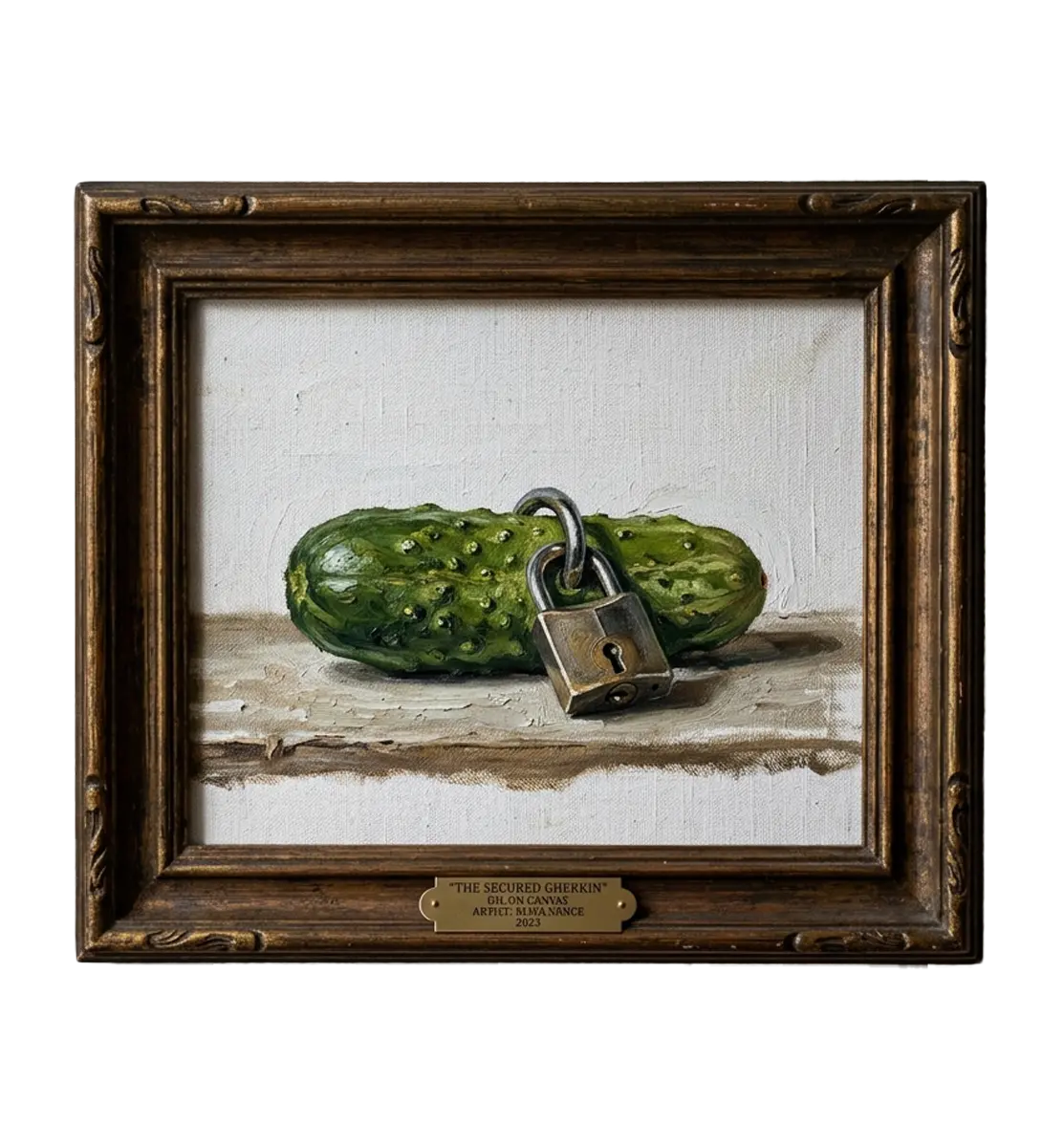
For as long as art has changed hands, authenticity has depended on trust: trust in a certificate, trust in a gallery's word, trust in a paper trail that can be lost, forged, or quietly altered. ArtLock replaces that trust with proof.
Every piece connected to ArtLock is bound to a Validated Data Token, an immutable record containing detailed attribute metadata: the piece's origin, its ownership history, and the verified conditions under which it was created or authenticated. This isn't a digital certificate that sits in a file somewhere. It's a permanent, tamper-evident record anchored the moment the piece enters the system.
The verification itself happens through ArtLock's kiosks, stationary and floating hardware that capture the data points that actually matter at the moment of creation or transfer: where it happened (GPS coordinates), when it happened (a permanent timestamp), who was involved (biometric verification of participants), and what the object is (a unique identifier and photographic record).
From there, verification becomes simple. Collectors, gallery owners, and artists can scan a QR code and independently confirm a piece's authenticity and provenance: no need to take anyone's word for it, no reliance on paperwork that could be years out of date or entirely fabricated.
The result: art that carries its own proof, everywhere it goes.
Because "trust me, it's authentic" has never been good enough, and the cost of getting it wrong keeps climbing.
Certificates of authenticity, gallery letters, and provenance documents can all be altered or fabricated. ArtLock replaces them with cryptographically anchored records that can't be quietly changed.
A collector shouldn't have to take a seller's word for a piece's history. With ArtLock, anyone can independently verify authenticity and provenance in seconds before money changes hands.
Origin, ownership, and authentication details are recorded immediately (GPS location, timestamp, verified participants) not reconstructed later from memory or incomplete paperwork.
A piece with verifiable, unbroken provenance carries stronger, more defensible value than one relying on a stack of documents that could be questioned.
Fraud in the art market often thrives on the difficulty of verification. ArtLock removes that difficulty: a single QR scan replaces a chain of assumptions.
Galleries, auction houses, and private sellers can offer buyers something stronger than reputation: provable history, available to check independently, every time.
Art has always relied on trust between people. ArtLock gives that trust something to stand on.
ArtLock doesn't ask anyone to take authenticity on faith: it captures verifiable proof at the exact moment a piece is created, authenticated, or transferred.
A stationary or floating kiosk records the piece's key data points at the moment of creation or verification: the foundation of its permanent record.
GPS coordinates confirm exactly where the verification took place: anchoring the piece to a real, provable location.
A permanent timestamp establishes precisely when the record was created: impossible to backdate or alter after the fact.
Biometric data confirms the identity of participants (the artist, the authenticator, or the current owner) tying the record to real, verified individuals.
A unique identifier and photographic record capture exactly what the piece is, creating a visual and structural fingerprint tied to its VDT.
All captured data is bound into an immutable Validated Data Token: a permanent record of origin and ownership that can't be quietly edited or erased.
A QR code on or with the piece lets anyone (a buyer, a gallery, an appraiser) scan and instantly confirm authenticity and provenance, without relying on a third party's word.
No step depends on trust. Every step produces proof.
ArtLock gives collectors, galleries, artists, auction houses, authenticators, insurers, and estate planners independently verifiable proof of authenticity, ownership, and provenance.
Verify a piece's authenticity and full ownership history before you buy, not after you've already committed to a purchase you can't undo.
Offer buyers independently verifiable provenance instead of relying solely on your reputation and paperwork: building trust that doesn't depend on taking your word for it.
Establish an immutable record of your work from the moment it's created, protecting your authorship and making forged reproductions easier to identify and reject.
Strengthen buyer confidence and reduce dispute risk by offering lots with cryptographically anchored provenance, verifiable by anyone in seconds.
Anchor your authentication findings into a permanent record tied to your verified identity, creating accountability and a lasting reference for future transactions.
Assess and underwrite art-related policies with access to verified ownership history and authentication data, reducing exposure to fraudulent claims.
Preserve a clear, tamper-proof record of ownership and provenance across generations: protecting the value and authenticity of collections passed down over time.
Wherever art changes hands or needs to prove what it is, ArtLock gives every party something firmer than trust: proof.
ArtLock doesn't just protect a piece's authenticity. It protects everyone's confidence in it.
Unlike paper certificates that can be forged or altered, ArtLock's records are cryptographically anchored the moment they're created, making fabrication structurally difficult, not just discouraged.
No need to contact a gallery, track down an appraiser, or trust a seller's claims. A single QR scan gives anyone direct access to a piece's authenticated history.
ArtLock runs on the same Validated Data Token infrastructure and patent portfolio behind ChainIT's broader verification platform, not experimental or unproven tech.
GPS location, timestamps, biometric verification, and photographic documentation are recorded at the moment of creation or authentication, not reconstructed later from memory or incomplete records.
A piece with unbroken, verifiable provenance holds stronger, more defensible value than one relying on a stack of documents that could be questioned or lost.
Buyers, sellers, and intermediaries spend less time and money verifying authenticity manually, proof is already built into the piece itself.
Physical kiosks (not just software) bridge the gap between a tangible piece of art and its permanent digital record, ensuring verification happens where the art actually is.
ArtLock doesn't just protect a piece's authenticity. It protects everyone's confidence in it.
Get clear answers to common questions about ArtLock, Validated Data Tokens, artwork verification, provenance, ownership history, physical kiosks, and independent authenticity checks.
At the moment of creation, authentication, or transfer, an ArtLock kiosk captures key data points: GPS location, a timestamp, biometric verification of participants, and a photographic record with a unique identifier. This information is sealed into a Validated Data Token, an immutable record anyone can later verify.
It's a permanent, tamper-evident digital record tied to a specific piece of art: containing its origin, ownership history, and verification details. Unlike a paper certificate, it can't be quietly altered or forged after the fact.
Scan the QR code associated with the piece. This gives instant access to its Validated Data Token, letting you independently verify authenticity and provenance without relying on anyone's word.
No. Verification happens through a simple QR code scan: accessible to collectors, galleries, and buyers without specialized tools or technical knowledge.
Ownership transfers are recorded as part of the piece's permanent history: building a continuous, verifiable chain of custody rather than a gap that has to be reconstructed later.
No. Because records are cryptographically anchored and immutable, they can't be recreated or altered the way a paper certificate can be forged or copied.
No. While it's especially valuable for expensive or historically significant pieces, the same verification process applies to any artwork where provenance and authenticity matter.
By establishing an immutable record at the moment of creation, ArtLock helps artists document authorship clearly: making it harder for forged reproductions to be passed off as authentic originals.
Kiosks are the bridge between the physical artwork and its digital record: capturing biometric, location, and timestamp data at the exact moment verification occurs, rather than relying on data entered manually later.
Yes. Any gallery, dealer, or auction house can use ArtLock's kiosks and verification system across their full inventory, giving every piece the same standard of provable authenticity.
ChainIT provides cryptographically verifiable state for identities, organizations, assets, devices, and authority. Every workflow, enterprise application, and AI agent can consume authoritative proof before executing decisions, approvals, settlements, or autonomous actions.
